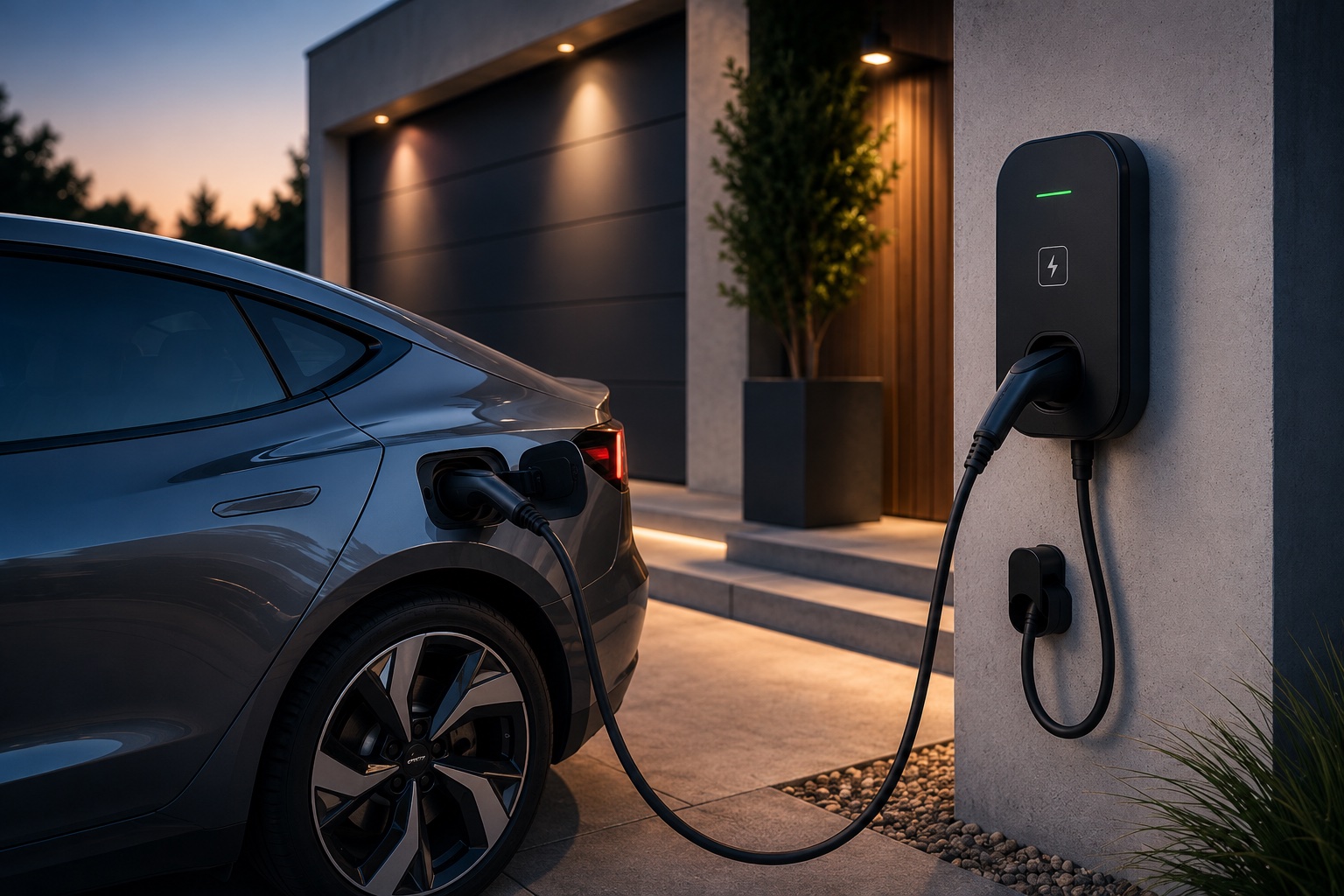
Home and workplace EV charging, installed properly so it plays nicely with the rest of your switchboard instead of tripping it every time the oven and the charger run together. We install and are certified for all the major charger brands, size the circuit correctly, and load-balance so the charger backs off automatically if the house is drawing a lot of power elsewhere. For homes with solar, we can set the charger up to prioritise your own generation over grid power. Workplace and multi-unit installs are quoted separately since they usually need a load study across the whole site first.
- Home & workplace charging
- Load balancing
- All major charger brands
- Switchboard capacity checks
- Solar & battery integration
- Rebate & compliance paperwork
Call 0432 520 620 or send through the details — usually a same-day written quote.
Get a QuoteCommon questions
Sometimes, not always — it genuinely depends on your existing board, how much spare capacity it has, and what else is already drawing power on the same supply, like ducted air conditioning or an electric hot water system. A newer board with spare circuit space can often take a charger with no upgrade needed beyond the dedicated circuit. An older board that is already close to capacity, or one that still has ceramic fuses, usually needs at least a partial upgrade first. We check this properly as part of the quote, and if an upgrade is needed we explain exactly why and what it involves, rather than assuming the worst case and charging you for work you do not need.
Yes, with the right setup, though it depends on your charger and inverter both supporting it. We can configure some chargers to prioritise your solar output first and only draw from the grid when your panels are not generating enough, which makes a real difference if you are often out during the day and charging when you get home, versus someone who charges overnight and will be drawing from the grid regardless of what the roof is doing. If you already have a battery as well as solar, we can talk through how the charger fits into that setup so it works with your existing system rather than competing with it for the same generation.
A straightforward home install — charger already chosen, dedicated circuit run to an accessible switchboard, no upgrade needed — is usually done in half a day once the quote is confirmed. If your switchboard needs an upgrade at the same time, we fold that into the same visit wherever the scope allows, so you are not paying for two separate callouts and waiting around twice. Jobs take longer where the cable run from the switchboard to the parking spot is long or has to go through finished walls or ceiling space, or where we are also setting up load balancing or solar integration, since that needs proper configuration and testing before we hand it over.
Load balancing means the charger automatically reduces how much power it draws if the rest of the house is using a lot at the same time — say the oven, ducted heating and the charger are all running together — so you do not trip the main switch or overload the supply. It matters more on older or smaller-capacity boards where the total available power is limited, and less on a board with plenty of headroom. We size and configure this as part of the install based on your actual board capacity, so for most homes the charger just quietly backs off during peak household use rather than causing a problem.
Most home EV chargers run fine on a single-phase supply, which is what the majority of Melbourne homes have, so three-phase is not a requirement for a standard home charger. Three-phase becomes relevant if you want faster charging speeds than single-phase can deliver, or for workplace and fleet charging where multiple vehicles need to charge at once. If you are not sure what supply you have, we can check it as part of the quote — it is usually visible at the switchboard or meter box — and we will tell you what your actual options are rather than assuming you need an upgrade you do not.
We do, though it is a different scope of job to a single house. Multi-unit sites usually need a load study across the whole building first, since you are working within a shared supply, and body corporate or owners corporation rules often come into play, particularly around who pays for what and whether the charger sits on a common meter or an individual unit's supply. We quote these separately from a standard home install for that reason, and we are happy to talk to a body corporate or facilities manager directly if that makes the approval process easier on your end.