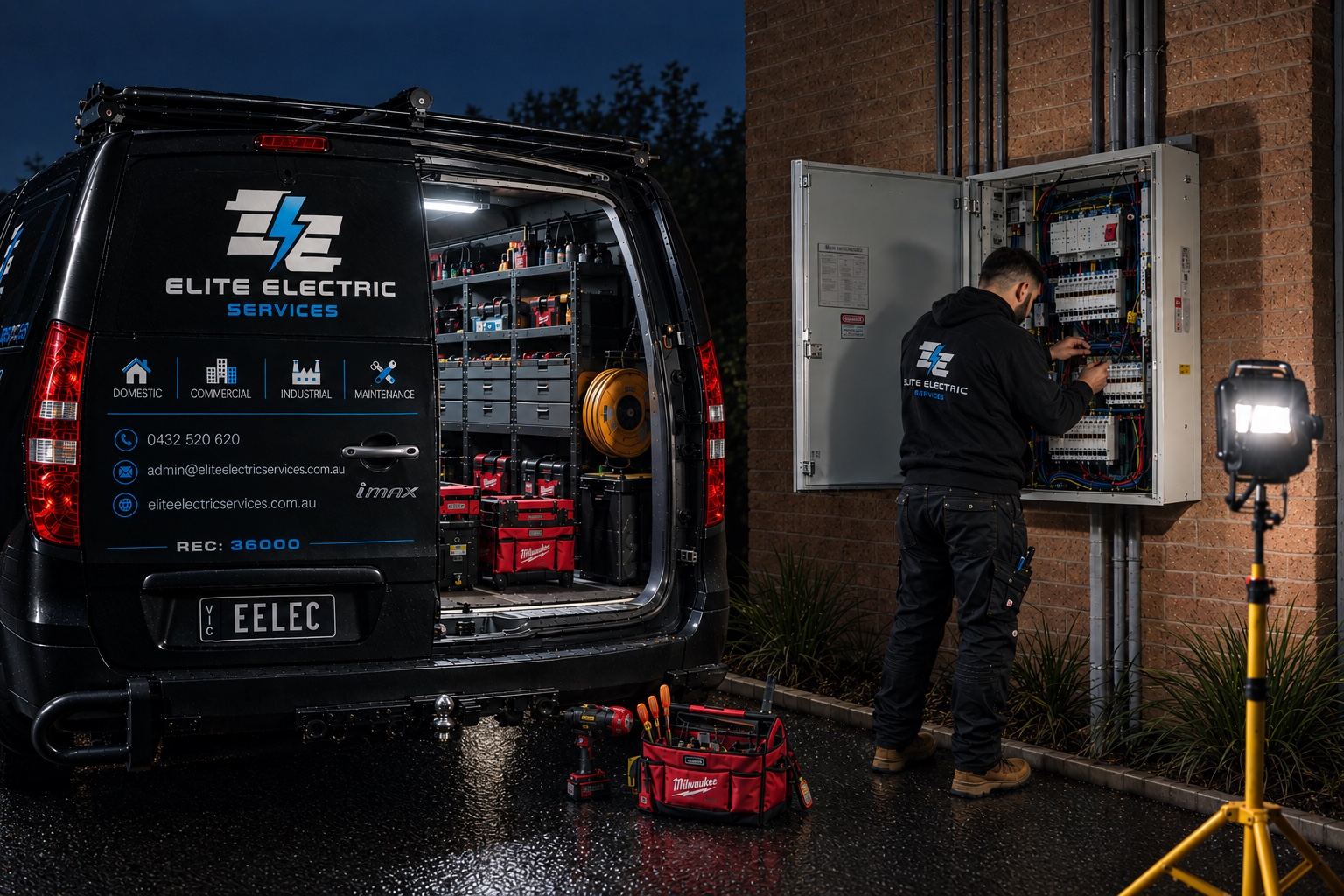
Lost power, a switch that keeps tripping, a burning smell from a power point, or a board that just will not stay on — call any time, day or night. We carry fault-finding gear on the van so most jobs get diagnosed and fixed in the one visit instead of a guess-and-return. That covers storm damage, blown appliances, dodgy DIY wiring from a previous owner, and the classic Sunday-night power point that just stopped working. If it genuinely cannot wait until business hours, we pick up the phone.
- 24/7 emergency callouts
- Fault finding & diagnostics
- Power outages & tripping switches
- Test & tag
- Storm & flood damage repairs
- Burnt-out points & switches
Something actually wrong right now? About 1 hour typical response across Melbourne — call rather than wait.
Call 0432 520 620Common questions
Our typical response for a genuine emergency across Melbourne is around an hour, sometimes faster if we are already nearby, and occasionally longer if you are further out or we are already on another urgent job when you call. We carry common parts and fault-finding gear on the van, so in most cases the electrician who turns up can actually diagnose and fix the problem on the spot rather than needing to leave and come back with the right part. When you call, we ask a few quick questions about what is happening so we can gauge how urgent it genuinely is and give you a straight answer on timing before you commit to anything.
Anything that is a safety risk right now — a burning smell from a power point or the switchboard, visible sparking, exposed or damaged wiring, a switchboard that will not reset no matter what you try, or a total loss of power with no obvious cause like a street-wide outage. Storm damage that has brought down a service line or soaked a switchboard also counts, even if nothing looks obviously wrong yet, since water and electricity is not something to wait on. One dead power point or a light that has stopped working is usually not an emergency in the safety sense, even though it is annoying, and can normally wait for a regular appointment. If you are ever not sure which category something falls into, call anyway; we would rather talk you through it on the phone than have you wait it out with something dangerous.
There is an after-hours rate, same as any trade, and it applies to genuine emergency callouts outside normal business hours — evenings, overnight and weekends. We tell you what that rate is when you call, before we come out — no surprise invoice at the end. For anything that is not urgent, we would rather book you in for a standard weekday appointment at the standard rate than have you pay more for work that could have waited. For genuine emergencies, though, we would always rather you call than sit on a hazard to save a few dollars.
First check your own switchboard for a tripped main switch or safety switch — if one has flipped to the off position, that is usually the cause, and it is worth trying to reset it once, though if it trips again immediately do not keep resetting it and call us instead, since that means there is an active fault. It is also worth checking whether it is just part of the house without power rather than all of it, which points to a single circuit issue rather than a whole-of-house problem. If everything at the board looks normal and you are still without power, it could be the underground or overhead service line into the property, which is worth calling us for rather than your energy retailer first, since we can tell you quickly whether it is your side of the meter or theirs.
Treat it as one until proven otherwise. A burning or hot plastic smell from a power point or switch usually means a loose connection or an overloaded circuit is generating heat inside the wall, and that can progress to an actual fire if it is left. Turn off and unplug anything at that point, switch off the circuit at the board if you can identify which one it is, and call us rather than waiting to see if the smell goes away on its own. In most cases it turns out to be something straightforward to fix once we get the point open, but the smell itself is not something we would ever tell you to ignore or wait on.
We do the actual repair work — insurance is a separate process that runs alongside it, and the two are not mutually exclusive. If a storm has brought down a line, flooded a switchboard, or damaged wiring, our first priority is making the property safe, which sometimes means isolating power to part or all of the house until it can be properly assessed. We can then provide a report and photos of the damage that you can use for an insurance claim, and quote the repair itself once we know the full extent of it. We are used to working alongside insurance assessors on storm damage jobs, so if your insurer wants to send their own person out first, we can usually work around that timeline.