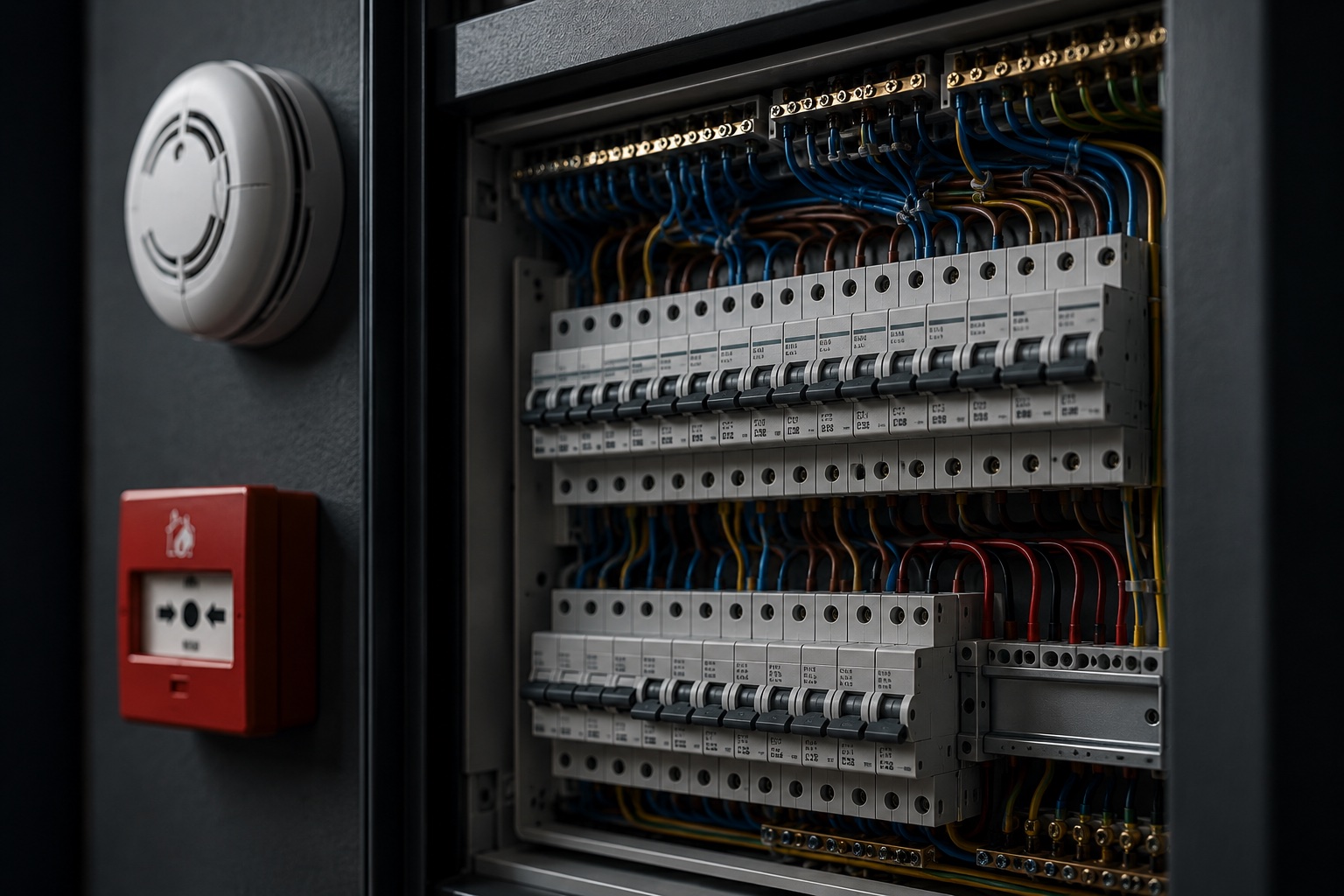
Most of Keilor East went up in the 1960s and 70s: solid brick-veneer homes on generous blocks, with detached garages, sheds and bungalows out the back. Sixty years on, the houses are still good but the electrical side has usually been left behind — original switchboards, no safety switches, and outbuildings running off whatever extension lead was handy. Add the knockdown-rebuilds and townhouses now going up around Milleara and the Centreway, and it is a suburb where we do everything from a single power point to a complete new-build install.
- Switchboard & safety switch upgrades
- Shed, garage & bungalow power
- EV charger installs
- Outdoor & security lighting
- New build & rebuild wiring
- Fault finding & repairs
The typical Keilor East job starts the same way: a home built somewhere between 1962 and 1978, still on its original switchboard, with a couple of circuits added over the years by whoever was cheapest at the time. The cable itself is often fine — PVC-insulated wiring from that era ages reasonably well if it has not been disturbed — but the board is undersized for how a house gets used now, and there are no RCDs on anything. That is the piece worth fixing first, and it is usually a one-day job.
The other Keilor East constant is the back of the block. Big allotments mean detached garages, workshops, sheds and bungalows, and a lot of them are fed by something that was never meant to be permanent. Running a proper submain out to an outbuilding — correctly sized, protected, and buried or run in conduit to standard — means you can actually use a welder or a compressor out there without tripping the house, and it stops the extension-lead-under-the-door arrangement that causes half the callouts we get.
Usually not, and we would rather tell you that than sell you one. PVC-insulated cable from the 1960s and 70s generally holds up well where it has not been disturbed or overheated, so in a lot of these homes the wiring itself is serviceable. What is almost always out of date is the switchboard — undersized, no safety switches, and carrying circuits that were added piecemeal. We inspect first, tell you what we actually find, and in most cases the sensible order is the board and RCDs now, then any specific problem circuits, rather than a whole-house rewire you may not need.
Yes, and on Keilor East blocks it is one of the most common jobs we do. It means running a submain from the main switchboard out to the outbuilding, sized for what you actually plan to run out there, with its own protection at the shed end. The run is either buried at the correct depth in conduit or run overhead, depending on your block and what is in the way. Tell us what the shed is for — a workshop with a welder and a compressor needs a very different supply to somewhere you just want a light and a couple of points.
Sometimes, but on a 1970s board it often needs work first, and we check rather than guess. We look at the board's spare capacity, the size of your main supply, and what else in the house draws heavily at the same time. Where there is not much headroom, load balancing is the answer — the charger automatically backs off when the oven, heating and everything else are running, so you get a safe install without upgrading the whole supply. If the board does need replacing first, we quote both parts together so you can see the real total rather than finding out halfway through.
Yes. On a new build we come in at rough-in once the frame is up, run all the cabling, and set out every point, switch, light and data outlet with you on site so it suits how you will actually use the rooms. Then we come back at fit-off once painting is done to install and test everything, and you get the compliance paperwork at handover. We work to the builder's program and flag early if something in the plan will not work electrically, rather than at the point where it has to be undone.
Not on the list? We cover Melbourne & all of Victoria — call 0432 520 620 or send through the details for a written quote.
Get a Quote