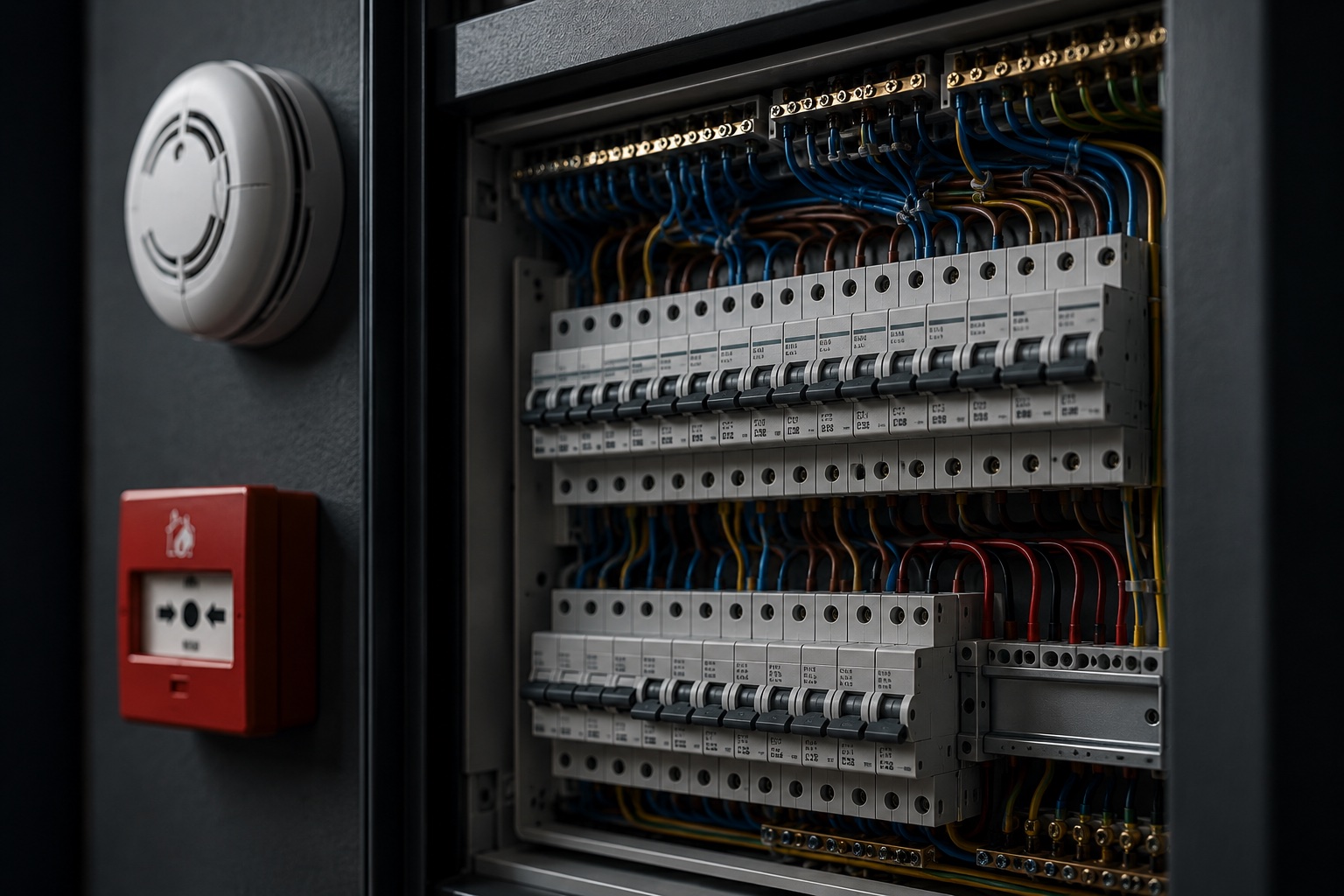
Old ceramic fuses and failing boards swapped for a modern switchboard with proper safety switches (RCDs) on every circuit. A lot of Melbourne's older homes still have the original fuse box from decades ago — no safety switches, corroded fuse wire, and one overloaded circuit away from tripping the whole house or worse. We replace the board, test every circuit, fit interconnected smoke alarms where needed, and leave you with a written report on what was done. It is the single job that does the most for the safety of a house.
- Safety switches (RCDs)
- Switchboard upgrades
- Smoke alarm installs & compliance
- Ceramic fuse replacement
- Surge protection
- Electrical safety inspections
Drag to see a real switchboard rewire
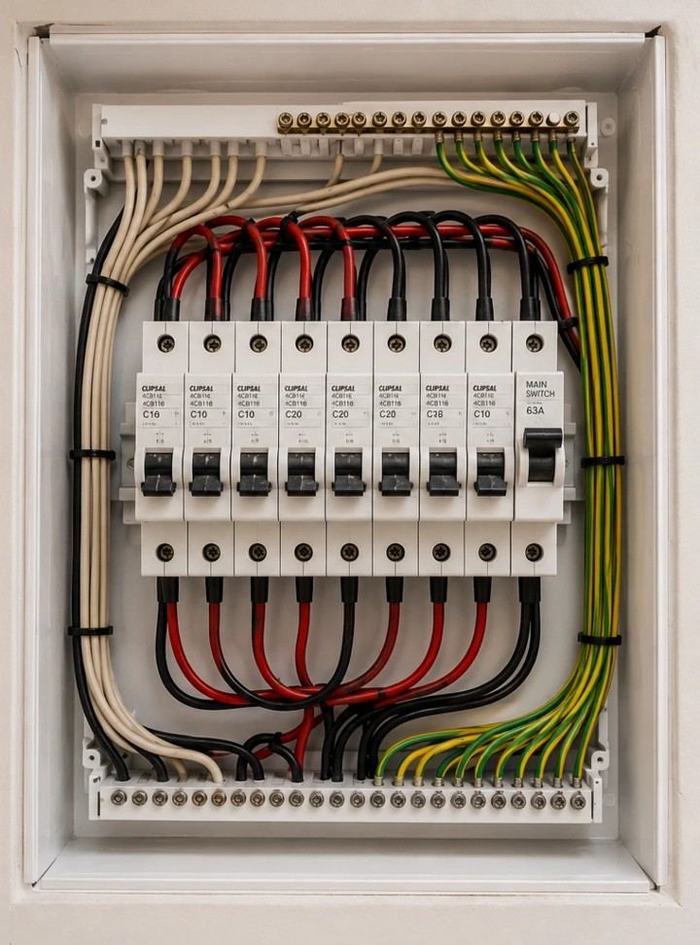
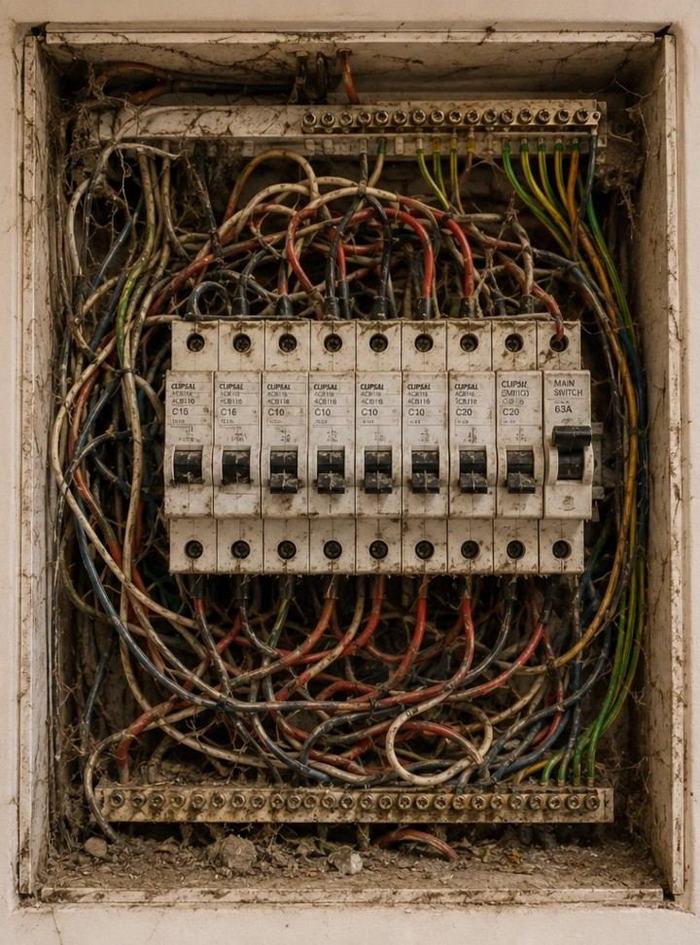 BeforeAfter
Call 0432 520 620 or send through the details — usually a same-day written quote.
Get a QuoteCommon questions
The clearest signs are ceramic fuses instead of circuit breakers, no safety switches at all, a board that is tripping regularly, or visible signs like scorch marks, a burning smell, or wiring that looks like it has been added to piecemeal over the years without much planning. A lot of Melbourne homes built before the 1980s still have some or all of the original fuse box, and even boards from the 1990s often only have partial RCD protection rather than covering every circuit, which is now the standard. We inspect the board for free as part of a quote and tell you straight whether it needs a full replacement, a partial upgrade like adding RCDs to the circuits missing them, or is genuinely fine as is — we are not going to sell you a new board if a smaller fix solves the problem.
A circuit breaker protects the wiring and the building — it trips if a circuit draws more current than the cable is rated for, which prevents overheating and fire. A safety switch, or RCD, protects people specifically — it constantly compares the current going out on a circuit against the current coming back, and if it detects even a small leak, like current running through a person instead of back through the neutral wire, it cuts the power in a fraction of a second, well before it becomes a fatal shock. The two do genuinely different jobs and you need both, not one or the other. Victorian regulations require RCD protection on power and lighting circuits in homes, and rental properties specifically have to meet minimum safety switch standards, but a lot of older boards we find still only have circuit breakers or ceramic fuses with no RCD protection at all.
Yes — Victorian law requires working, compliant smoke alarms before a property is sold or a new tenancy begins, and the requirements have gotten stricter over the years around things like interconnection between alarms, so a house with alarms from a decade ago is often no longer compliant even if they still beep during a test. We can inspect what you have, tell you what is missing or out of date, and bring the property up to standard with new alarms and a compliance certificate for the agent or incoming tenant. This is worth sorting out before settlement or a lease start date, since it is a common last-minute hold-up otherwise.
Yes, briefly. The switchboard is where all the power for the house comes together, so we do need to isolate the supply to swap the old board for the new one, which usually means the whole house is without power for a few hours during the changeover itself, not the whole day. We let you know in advance so you can plan around it — things like defrosting a freezer or making sure anyone working from home knows the window. Everything else, like running new wiring to the board or prepping the new board itself, we do beforehand with the power still on wherever possible, so the actual outage is kept as short as we can make it.
Council approval is not usually needed for a standard switchboard upgrade — it is prescribed electrical work covered by our licence and the Certificate of Electrical Safety, not a building permit item. Your electricity distributor does sometimes need to be involved, though, particularly if the upgrade includes increasing your supply capacity or moving the meter position, since the point of attachment to the street is their equipment, not ours. Where that applies we handle the notification to the distributor as part of the job so you are not stuck coordinating it yourself.
Not necessarily. A safety switch that trips is actually doing its job by catching a fault, so the first step is finding what is causing it rather than jumping straight to replacing the board. Often it is a single faulty appliance, a damp outdoor power point, or moisture in an old light fitting, and once we isolate which circuit is causing it, the fix might just be repairing or replacing that one thing. If the board itself is old, has no individual RCDs per circuit so you cannot isolate the problem easily, or the tripping is happening because the board genuinely cannot handle the household's power draw anymore, an upgrade becomes the more sensible fix. We diagnose before we quote a replacement, not the other way around.